- Joyce's Lunar Newsletter
- Posts
- When she called me darling, I knew she meant it.
When she called me darling, I knew she meant it.
It’s 2025.12.01 on the lunar calendar today.

Joyce Kwon
January 19, 2026
Hello? Today marks ten years since the release of the EP “Winter,” which I made with my classmate Dan. It is now available to stream. And below is a sketch of a tune I hummed over a muted piano last night.
Rhoda Levine ❤ 1932–2026
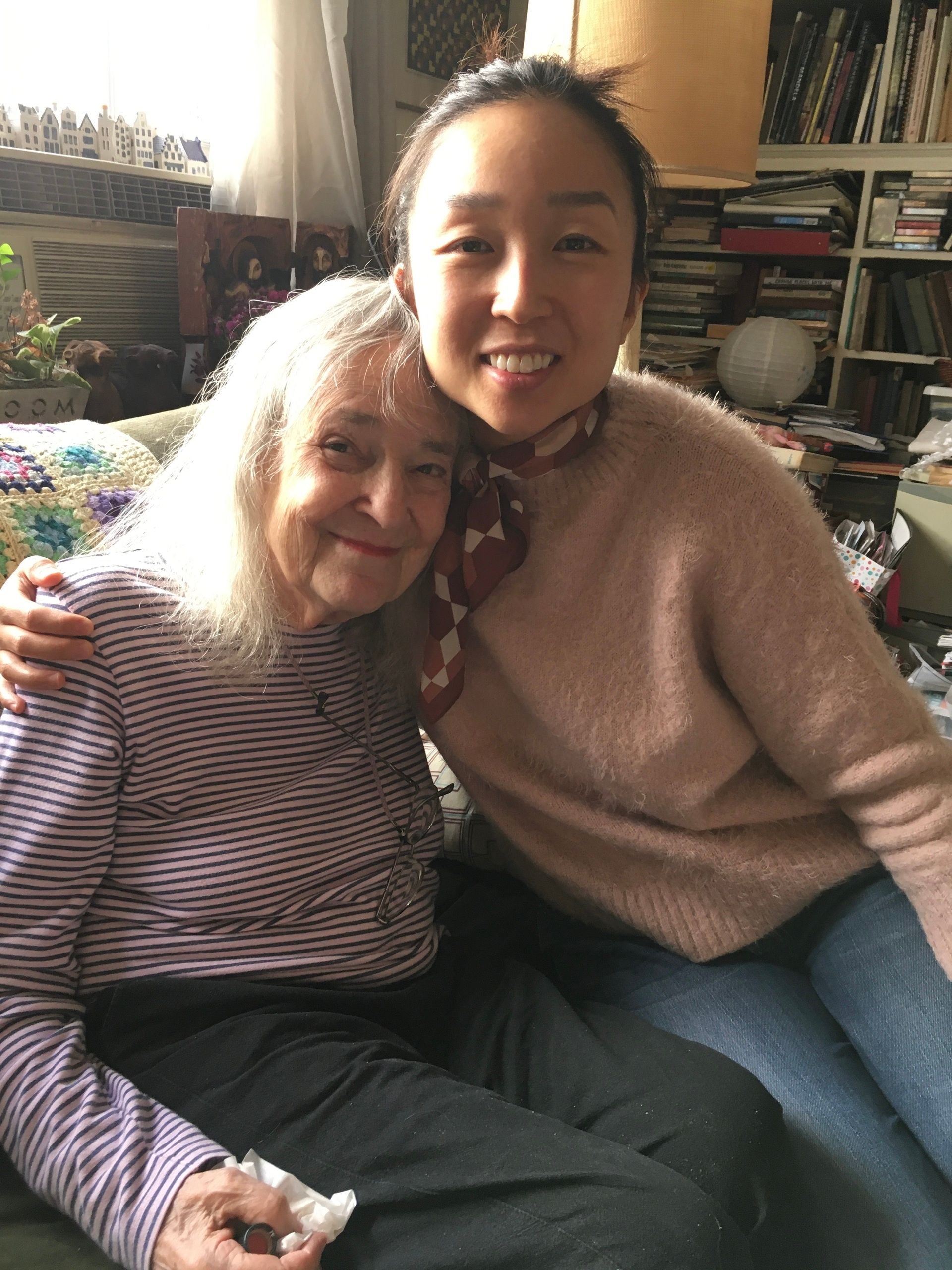
Rhoda and Joyce, October 2022
I met Rhoda Levine in the fall of 2011 when I was a student at Manhattan School of Music. Rhoda was teaching the Nu Art Ensemble with the jazz department chair Justin DiCioccio, and though I wasn’t familiar with her renown as an opera director, I was starstruck to learn that she wrote the libretto for Luciano Berio’s “Opus Number Zoo.”
When I composed a piece for an onion, Rhoda supplied the onion for my performance from her nearby Gristedes. When I was young and broke, Rhoda took me out for meal after meal and fretted about me finding work. We would walk to the Greek diner around the block and through Washington Square Park, where she would compliment each and every single dog we saw. She adored her cat Jeoffry-She and often signed off on emails with her feline roommate.
When I picture Rhoda, I think of her smiling in dangling earrings shaped like Hershey’s Kisses and her periwinkle-blue mock-neck sweater. I think of how she was wearing a neck brace for a time and still participated in the People’s Climate March. There couldn’t have been many octogenarians marching in neck braces, and I was awed by Rhoda’s fearlessness. A classic Rhoda accessory was a stuffed black LeSportsac crossbody purse, and I got her a black LeSportsac backpack when I left for Korea, hoping to even out the imbalance caused by the weighty satchel.
When I called and told her about an imploding close friendship, she was stumped and said she’d never experienced such a situation. She spoke proudly of her best friend Joan Tower at Bard College, one of the few female classical composers of their generation. She spoke fondly of her common-law husband Hans, who was the general manager of the Netherlands Opera.
She spent a lot of time working in Europe but was a New Yorker through and through. Her mother had taught at NYU and she had been at her one bedroom by the school for decades, secured thanks to the building super having the hots for her. I loved being at her apartment, looking at photos—of her contemporaries, from when she directed “Where the Wild Things Are,” and especially of Rhoda at my age, when she was a brunette with bangs.
Rhoda urged me against getting old as she dealt with a bad back and succeeded in holding on to her youth in her sense of wonder for the mundane and the fantastic. She stayed engaged with the world and was vocal in her dismay at Trump and his cohort.
She wrote children’s books, including “Three Ladies Beside the Sea” with illustrations by Edward Gorey. I treasure my copy with Rhoda’s signature bird in Sharpie from her delightful reading at the Strand and gave it to my sister.
On my last visit to NYC, I sat with her caretaker, a newlywed gay Filipina, who described an instance of people treating her with hate because she was Asian. Rhoda listened attentively, as she was wont to do, and simply uttered, “Well, fuck ‘em.”
Rhoda would offer vodka when I showed up at her door and would tell me, “Darling, you’ve got to have affairs.” She was my Jewish mother and I did not always heed her advice, but I looked to her example as an exceptional life, well lived. Rhoda was a dear friend, brimming with love for people and animals and with joyful curiosity for life and art. A trailblazer, she belonged in the world of theatre with its air kisses but the white gloves and pearls she wore when Harvey Lichtenstein was made head of BAM were just not her style. When she called me darling, I knew she meant it. |  |
🔊 Currently listening to “Opus Number Zoo”
Reply